
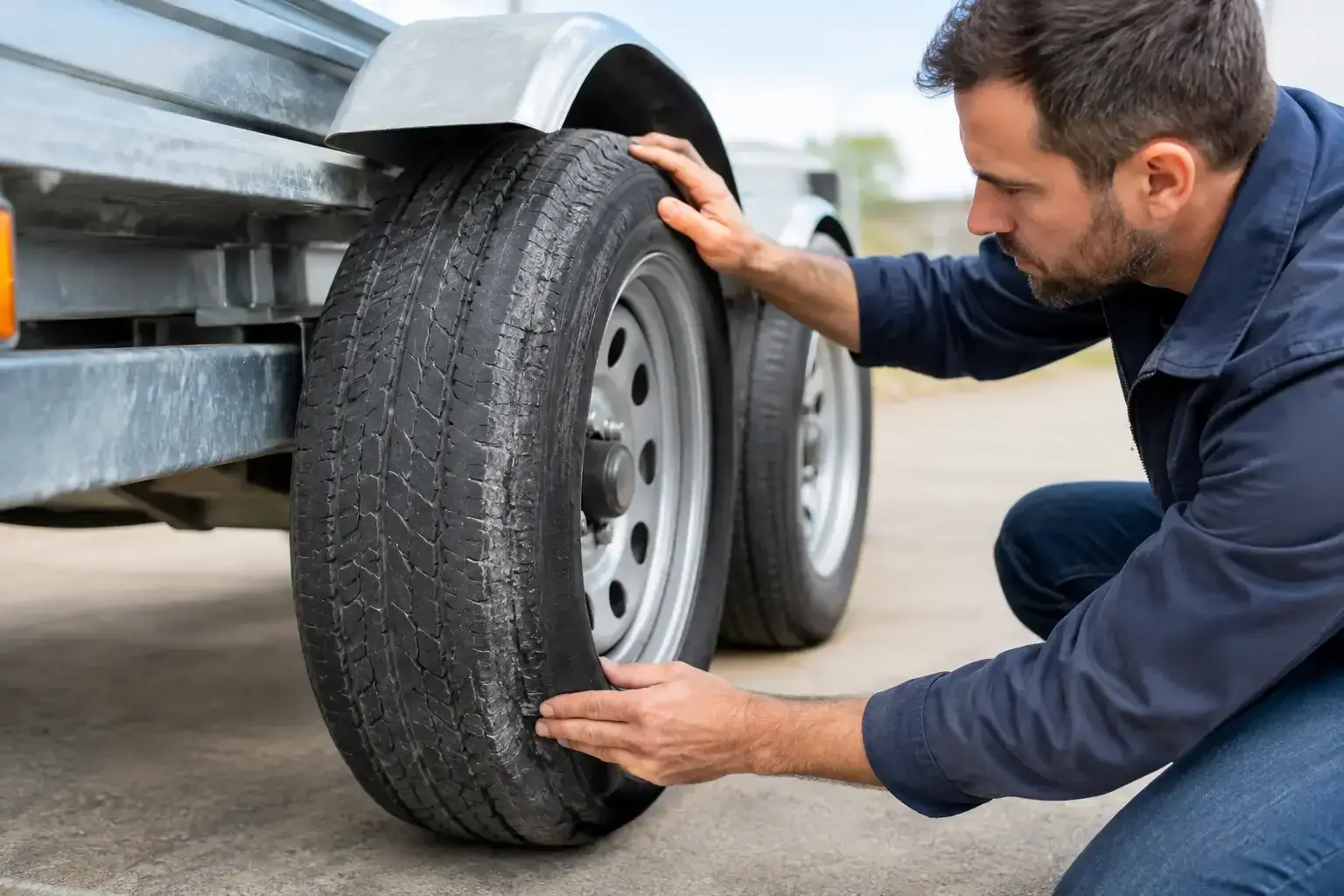
A trailer tire rarely wears out without giving you a warning first. Uneven trailer tyre wear can point to a simple pressure issue, but it can also be the first visible sign of worn bearings, bent components, poor alignment, overloaded axles, or suspension trouble. Ignore it long enough and a cheap tire check can turn into a roadside failure, damaged cargo, missed work, or a ruined weekend.
The tread is telling you something. The job is to read it before the tire becomes the weak point.
What Trailer Tyre Wear Is Trying to Tell You
Tires wear according to how they meet the road. When the load, wheel angle, pressure, and suspension movement are right, wear should be reasonably even across the tread. Some variation is normal, especially on tandem-axle trailers that scrub tires slightly during tight turns. Fast or uneven wear is not something to write off as normal.
Start by looking at every tire, including the spare. Compare the inside shoulder, center tread, and outside shoulder. Run your hand lightly across the tread surface when the tire is cool. You are looking for smooth, even wear, not sharp edges, dips, bulges, cracking, or cords showing through.
A tire can still hold air and look acceptable from a distance while being unsafe for another loaded run. That is why a quick visual check before towing matters, particularly if your trailer works hard on construction sites, gravel roads, paddocks, or long highway runs.
Common Trailer Tire Wear Patterns
Wear in the center of the tread
A tire worn mainly through the middle is commonly overinflated for the load it is carrying. Too much pressure crowns the tire, reducing the amount of tread that contacts the road. It can also make an unloaded trailer ride harshly and place more stress on the trailer and its cargo.
That does not mean you should simply let air out. Trailer tire pressure must suit the tire’s load rating, the actual trailer load, and the manufacturer’s specifications. Underinflating a tire to chase a wider contact patch creates heat, sidewall flex, and a real risk of failure.
Wear on both outside edges
Both shoulders wearing faster than the center often means the tire has been run underinflated. The sidewalls flex more than they should, generating heat and forcing the outer edges to carry extra load. This is one of the most common causes of premature trailer tire failure.
Pressure should be checked cold, before you tow. Checking at the fuel stop after an hour on the road will give a higher reading and does not tell you whether the starting pressure was correct.
One-sided shoulder wear
If the inside or outside edge is wearing faster, look beyond the tire. A bent axle, misaligned axle, worn suspension bush, damaged spring, loose U-bolt, or overloaded trailer can change the wheel angle enough to scrub rubber off one side.
This pattern is especially worth investigating after clipping a curb, hitting a pothole while loaded, backing into an obstacle, or traveling over rough ground. The trailer may still tow straight behind the vehicle, but the tire wear will keep getting worse until the underlying fault is repaired.
Cupping, scalloping, or patchy wear
Cupped tread has alternating high and low patches around the tire. It can be caused by a loose wheel bearing, worn suspension components, wheel imbalance, an out-of-round tire, or a damaged wheel. On a trailer with mechanical brakes, a dragging brake can also create excessive heat and contribute to uneven wear.
Patchy wear needs a proper inspection rather than a new tire fitted over the top of the problem. Replacing the rubber alone may get you back on the road for a short time, but it will not correct a loose bearing or damaged running gear.
Rapid wear on one tire of a tandem trailer
On a tandem setup, one tire wearing much faster than the rest can mean that axle is carrying more than its share of the load. It may be caused by uneven loading, suspension equalizer issues, a bent axle, different tire sizes, or a mismatch in tire construction and tread depth.
Tight turns naturally create some tire scrub on tandem trailers. However, a healthy trailer should not destroy one tire while the others look nearly new. Treat a major difference as a workshop issue, not just the cost of owning a tandem.
Load, Pressure, and Speed Must Work Together
A trailer tire is part of a system. Its load rating, pressure rating, speed capability, wheel rating, axle capacity, and the trailer’s loaded weight all need to match the work being asked of it.
Overloading is not always obvious. A trailer may be under its gross rating but still overload one axle or one side because the equipment is positioned poorly. A skid steer, mower, pallet, generator, or load of landscaping material placed too far forward or too far back can change how the trailer rides and how the tires wear.
Load distribution also affects towing stability. Too little weight on the tow vehicle’s hitch can encourage sway, while too much can overload the rear of the tow vehicle and unload its front steering axle. Neither condition does the trailer tires any favors.
Use matching tires of the same size, construction, and load rating across an axle. Mixing a worn tire with a much newer one, or fitting different brands with noticeably different overall diameters, can make a tandem trailer work against itself. It may seem minor in the driveway, but it matters at highway speed and under load.
Check the Parts Behind the Wheels
When trailer tire wear is uneven, inspect more than the tread. With the trailer safely supported and wheels chocked as needed, check for play in the wheel bearings. A wheel that rocks or rumbles when spun needs attention. Also look for grease leaking around the hub, damaged dust caps, and signs of heat discoloration.
Inspect leaf springs, rocker arms, equalizers, shackles, U-bolts, and mounting points for movement, cracking, worn bushes, or missing hardware. On independent suspension, inspect the arms, mounts, and alignment points. A cracked weld, loose bracket, or bent component is not a temporary-fix job.
Wheels matter too. A bent rim can cause vibration and uneven contact with the road. Check for cracks around the stud holes, damaged bead seats, loose lug nuts, and corrosion that prevents the wheel from seating properly against the hub.
If brakes are fitted, make sure they release fully and operate evenly. One hot hub after a short run is a warning sign. Do not touch a hot hub directly – use care and let it cool before inspecting it.
A Practical Tire Check Before You Tow
A proper pre-trip check takes only a few minutes and can prevent a long delay later. Before moving off, check cold tire pressure with a reliable gauge, inspect the sidewalls for cuts and cracks, and look across the tread for nails, exposed cords, or uneven wear.
Then check that lug nuts are secure, the hitch and safety chains are correctly connected, lights and brakes operate as they should, and the load is tied down and balanced. After the first part of a long trip, pull over somewhere safe and look again. A tire going soft, a hot hub, or a shifted load is easier to deal with early than at the side of a busy road.
For working trailers, schedule a more thorough inspection at regular service intervals. The right interval depends on use. A trailer used daily on job sites needs closer attention than a lightly used box trailer that spends most of its life under cover. Time matters as well as mileage because tires age, rubber hardens, bearings sit, and seals deteriorate.
Replace Tires for Condition, Not Just Tread Depth
Tread depth is only part of the decision. Trailer tires can age out before the tread is worn away, especially on recreational trailers that sit for long periods in sun and weather. Look for sidewall cracking, dry rot, bulges, separation, and damage from curbs or debris.
Do not rely on an old spare just because it has never touched the road. Check its age, pressure, condition, and load rating. A spare is only useful if it can safely carry the trailer when you need it.
When replacement is needed, fit tires that are suitable for the trailer’s actual work. A light-duty tire may be fine for occasional garden runs but not for regular equipment transport, long-distance hauling, or heavy loads. Saving money on the wrong tire often costs more when it wears early or fails under pressure.
If wear points to an axle, bearing, brake, suspension, or structural issue, repair that issue first. AJF Trailers takes that approach because a new set of tires should finish a proper repair, not hide an unfinished one.
A clean, even tread pattern is not just good tire life. It is proof that the trailer is carrying its load properly, rolling straight, and ready to do the work you rely on it for.