
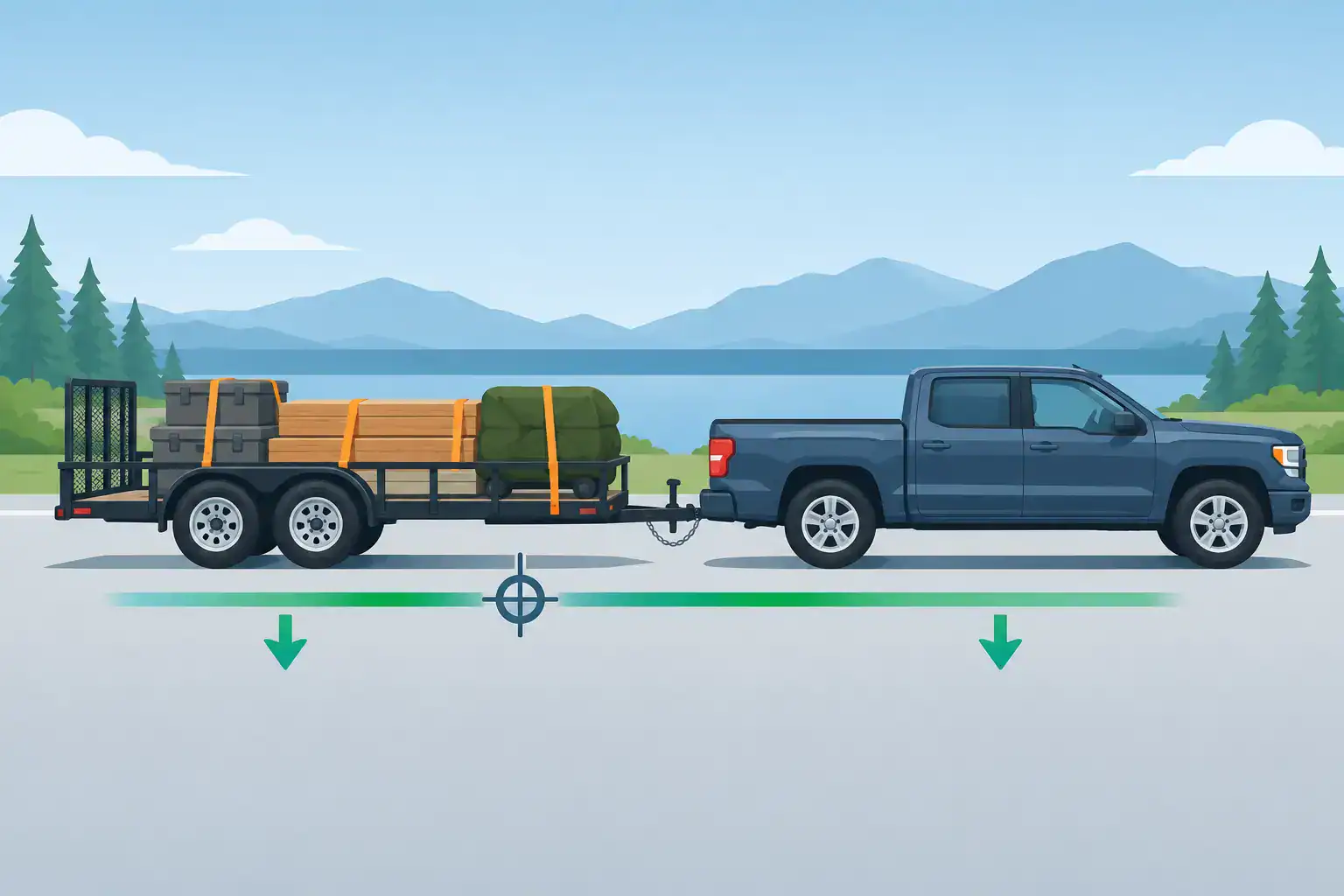
A trailer that starts swaying at highway speed is not a minor inconvenience. It can damage your gear, wear out tyres and suspension, put the tow vehicle out of control, and turn a workday or weekend trip into an expensive recovery job. Knowing how to balance trailer loads starts before you pull away, not when the trailer begins moving around behind you.
The goal is simple: keep the load low, centered, secure, and positioned to place the right amount of weight on the hitch. The detail matters because a trailer does not carry every load the same way. A pallet of pavers, a compact excavator, a mower, and a load of green waste each have a different center of gravity and need to be treated accordingly.
Start With the Weights That Matter
Before loading anything, know the limits of the whole setup. That means the trailer’s aggregate trailer mass rating, axle and tire ratings, the hitch rating, and the towing and tow-ball limits for the tow vehicle. The lowest applicable rating is the limit. A heavy-duty-looking trailer does not make an overloaded tow vehicle safe, and a capable ute cannot make undersized tires or a light axle carry more than they are built for.
Also account for everything added to the trailer, not just the main item. Toolboxes, ramps, cages, spare tires, fuel, water tanks, and tie-down gear all count. This is where people get caught out with work trailers. The machine may be within the trailer’s capacity on paper, but the machine, attachments, fuel, and gear together may not be.
If you have any doubt, use a public weighbridge. It is the fastest way to replace guesswork with real numbers. Weigh the tow vehicle and trailer as a combination, then check axle loads and hitch weight where possible. This is especially worthwhile after a new build, a major modification, or a change in the equipment you carry every week.
How to Balance Trailer Loads Around the Axles
For most conventional bumper-pull trailers, the load should sit slightly forward of the trailer axle or axle group. That forward bias creates positive tongue weight, which helps the trailer track behind the tow vehicle.
A commonly used starting point is about 10% to 15% of the loaded trailer weight on the tongue. The right figure depends on the trailer design, tow vehicle, hitch, and manufacturer instructions, so it is not a substitute for checking your specific equipment. What matters most is that the tongue has enough downward load to keep the trailer stable without exceeding the hitch or rear axle limits of the tow vehicle.
Too little tongue weight is a common cause of sway. When most of the weight sits behind the axles, the trailer can begin steering itself. Small inputs from wind, road grooves, passing trucks, or a rough shoulder can build into a serious oscillation.
Too much tongue weight causes different problems. It can squat the rear of the tow vehicle, lighten the steering axle, reduce braking and steering response, and overload the hitch, rear suspension, or tires. A weight-distribution hitch may help on suitable setups, but it does not fix an improperly loaded trailer. Position the load correctly first.
Think of the axles as the balance point. Move a heavy item forward in small increments, then recheck the tongue weight and vehicle stance. With machinery, a few inches can make a meaningful difference. Do not assume loading it hard against the front rail is always right, either. That can put too much weight on the hitch and place unnecessary stress on the front of the trailer.
Keep Heavy Items Low and Centered
Weight position is not only about front to back. Side-to-side balance matters just as much. Place the heaviest items as close to the trailer centerline as practical, distributing weight evenly across both sides of the axle group.
A trailer loaded heavily on one side can pull unevenly, sit low on one tire, and put extra load through one spring, bearing, brake, and wheel. It may not be obvious on a short trip, but repeated uneven loading shortens component life. On a dual-axle trailer, unequal weight can also make one side work much harder during turns and braking.
Keep the center of gravity as low as possible. Put dense, heavy gear on the deck rather than stacking it high. A tall load can be within the trailer’s weight rating and still be unstable because it shifts weight more aggressively when cornering, braking, or traveling over uneven ground.
This is particularly relevant for landscaping and agricultural loads. Loose green waste may look light, then become high and top-heavy. Tanks and bins can shift their load as the contents move. Machines with booms, buckets, or raised attachments need to be transported in their designated travel position, with hydraulic attachments lowered and secured where appropriate.
Secure the Load So It Cannot Change Balance
A well-balanced load that is not properly tied down will not stay well balanced. Every restraint needs to control forward movement, rearward movement, sideways movement, and upward bounce. Braking hard, changing lanes, and hitting a pothole put forces through the tie-downs that are far greater than the load’s stationary weight suggests.
Use rated tie-down points and rated restraints suited to the job. Chains and binders are commonly used for plant and machinery; quality straps may suit lighter equipment and general cargo when protected from sharp edges. Do not tie a heavy item to a cage rail, a removable side, or a point that was never designed to carry restraint loads.
For equipment with wheels, chock it where needed and secure it independently. Do not rely on the parking brake, transmission park position, or a single strap over one axle. A mower, ATV, or compact machine can move as suspension compresses and rebounds. Secure it at the points specified by its manufacturer whenever possible.
After the first few miles, stop in a safe place and inspect everything. Straps settle, chains bed in, and loads can shift slightly once the trailer begins working. Recheck again during long trips, after rough roads, and whenever you have made a hard braking maneuver.
Match the Trailer to the Load
Some load-balance problems begin with the wrong trailer. A trailer designed for general box loads may not be the right platform for a skid steer, long lengths of steel, a side-by-side, or a water tank. Deck length, axle placement, ramp position, tie-down locations, braking, suspension, and drawbar design all affect where the load can safely sit.
Long loads need support without excessive overhang. A load that extends beyond the rear changes the balance calculation and may need marking or additional precautions under local road rules. Loads that cannot sit low or close to the axles may require a different trailer design rather than a creative tie-down arrangement.
For regular commercial work, a purpose-built trailer saves time and reduces the temptation to make every load fit the same way. The right ramp angle, deck layout, tie rails, and axle capacity make safe loading repeatable instead of a fresh problem at every job.
Watch for Signs the Load Is Wrong
Your tow vehicle will usually tell you when the setup is not right. Excessive rear squat, vague steering, a trailer that feels pushy under braking, one-sided tire wear, or repeated sway are all warning signs worth taking seriously.
If sway starts, do not accelerate through it or make sharp steering corrections. Hold the steering wheel steady, ease off the throttle smoothly, and let the combination slow down in a straight line. If your trailer brake controller allows it and conditions are safe, a gentle manual application of the trailer brakes may help bring the trailer back in line. Once stopped, reposition and secure the load before continuing.
Wind and road conditions can expose a marginal load even when it seemed fine around town. A trailer that is stable at 40 mph may become unsettled at highway speed or when a truck passes. That is why a proper load check matters every time, not only when the trailer looks obviously heavy.
A Practical Check Before You Leave
Before pulling onto the road, walk around the complete setup. Confirm the load is centered and slightly forward of the axles, the trailer sits level or close to level, and the tow vehicle has not sagged excessively at the rear. Check that ramps, jockey wheels, gates, and loose gear are locked down.
Then inspect tires for damage and correct inflation, make sure lights and brakes are working, connect safety chains correctly, and confirm the breakaway system is ready if fitted. Finally, look at every tie-down point. If a strap is twisted, rubbing on a sharp edge, or only just reaching, fix it now. A few extra minutes in the yard are cheaper than a damaged trailer, damaged equipment, or a missed job.
A trailer should feel like a controlled extension of the tow vehicle, not something you have to fight all the way home. If your usual load is difficult to position, constantly overloads one area, or never tows with confidence, get the trailer setup assessed before the next run. Proper repairs, modifications, or a better-matched trailer can make safe loading a routine part of the job rather than a gamble every time you hitch up.