
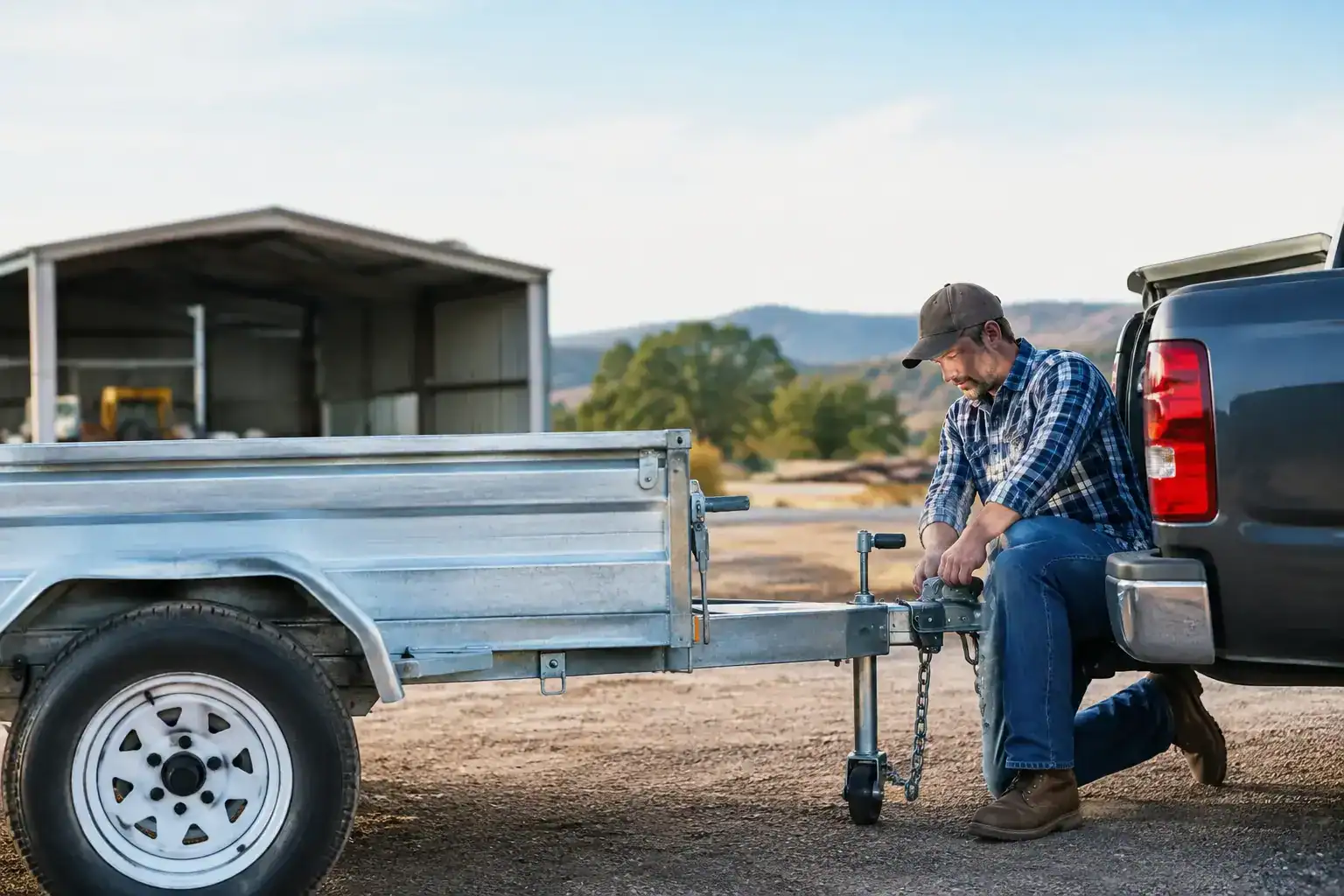
A trailer sitting in the yard without registration is not just an inconvenience. It can hold up a job, delay a delivery, or turn a planned weekend away into wasted time. This NSW trailer registration guide sets out what working owners and first-time buyers need to have sorted before putting a trailer on the road.
Registration is not just a formality. It confirms that the trailer can be identified, its stated weights make sense, and it meets the standards expected for use on New South Wales roads. Get the details right before you head to a service center and the process is straightforward. Guess at the paperwork, weight ratings, or repairs, and it can become a costly second trip.
Start With the Trailer’s Identity and Weight Ratings
Before registration, the trailer needs a clear and legitimate identity. That starts with its vehicle identification number, commonly called a VIN. On a properly built trailer, the VIN should be permanently marked on the chassis and match the compliance plate or manufacturer documentation.
The plate should also show the trailer’s key ratings. For most light trailers, those figures include tare mass, aggregate trailer mass (ATM), and gross trailer mass (GTM). These are not numbers to treat as rough estimates.
Tare mass is the empty weight of the trailer. ATM is the maximum permitted weight of the trailer when it is fully loaded and unhitched. GTM is the maximum load carried by the trailer wheels when it is coupled to the tow vehicle. Your payload is the difference between the trailer’s tare mass and ATM.
Those ratings affect registration, braking requirements, how you load the trailer, and whether your tow vehicle is suitable. A trailer may look capable of carrying a mini excavator, pallets, livestock feed, or landscaping gear, but the plate is what sets the legal limit. The tow vehicle must also have enough towing capacity and a suitable towbar for the actual loaded weight.
If the VIN is missing, the plate is damaged, or the stated weights do not match the trailer’s build, deal with that before trying to register it. A proper assessment is far better than hoping it will pass inspection as it stands.
NSW Trailer Registration Guide: Paperwork to Prepare
The exact documents can vary depending on whether the trailer is new, used, previously registered, imported, home-built, or brought in from another state. Still, most owners will need proof of identity, proof of ownership, and the trailer’s technical paperwork.
For a new trailer bought from a reputable manufacturer, you should receive the documents needed to support registration. Keep the invoice, VIN details, compliance information, and any supplied registration paperwork together. If you are buying privately, make sure the seller’s details, VIN, registration status, and receipt all line up before money changes hands.
For a registration visit, prepare the following where relevant:
- proof of identity and a completed registration application
- proof of acquisition, such as a tax invoice, receipt, or sale contract
- the trailer’s VIN and manufacturer or compliance information
- an inspection report if one is required for the trailer’s circumstances
- evidence of any approved engineering or major modification work
Do not rely on a handwritten description such as “box trailer” or “plant trailer” as the whole story. Registration records need the correct trailer type, weights, axle configuration, and identifying details. Clear paperwork protects you if the trailer is later sold, stolen, repaired after an accident, or questioned during a roadside inspection.
When an Inspection May Be Required
A new trailer supplied with correct documentation is generally a cleaner process than an older unregistered trailer with an unknown history. Used, expired, modified, or interstate trailers may require an authorized unregistered vehicle inspection, often called a blue slip, before they can be registered in NSW.
An inspection is not there to make life difficult. It checks that the trailer is what the paperwork says it is and that the basics are safe and compliant. Inspectors may look at the VIN, chassis condition, lights, reflectors, tires, brakes, safety chains, coupling, suspension, guards, and general workmanship.
This is where patch-up repairs cause trouble. A cracked drawbar covered with paint, badly worn bearings, loose wiring, or a brake system that has not been maintained may stop the registration process. It can also leave you with a trailer that is unsafe when loaded.
For trailers with an ATM above 2,500 kg, ongoing inspection requirements can apply at renewal. These trailers carry more consequence when something fails, particularly when used for machinery, building materials, or heavy farm equipment. Keep service records and fix faults when they are found rather than waiting for renewal time.
Check the Build Before You Book Anything
A registration inspection is not the best place to discover that your trailer needs work. Give it a practical check in the driveway or workshop first.
Start at the coupling. It should suit the trailer’s ATM, lock securely onto the towball, and have safety chains that are correctly rated and attached. Then check that the breakaway system, where required, is fitted and operating as intended. Brakes must be appropriate for the trailer’s rating and must apply evenly.
Move to the wheels and undercarriage. Tires need legal tread, no serious cracking, and load ratings that suit the trailer. Wheel bearings should run smoothly without excessive play or heat. Look at springs, hangers, U-bolts, axle mounts, and chassis rails for cracks, distortion, rust damage, or poor previous welds.
Finally, connect the trailer to the tow vehicle and test every light. That means brake lights, tail lights, indicators, number plate light, and reflectors. Electrical faults are common because trailers spend time in weather, mud, water, and long grass. A corroded plug or bad earth can create a string of problems that takes minutes to prevent and hours to diagnose later.
Modifications Can Change More Than the Trailer Looks
Adding a cage, ladder rack, toolboxes, ramps, winch, extra axle, larger wheels, or a different suspension setup may be useful for the job. It can also affect the trailer’s weight, load distribution, braking, structural strength, and compliance.
Minor maintenance is one thing. Major structural modifications are another. If a trailer has had its drawbar extended, chassis altered, axles moved, brakes upgraded, or load rating changed, do not assume the existing plate still tells the full story. The work may need engineering approval or an inspection before registration can proceed.
This matters most for work trailers. A landscaper adding a high cage, a contractor carrying compact equipment, or a farmer fitting heavier ramps can shift weight in ways that affect stability. A useful trailer needs to be built around what it will actually carry, not just what fits on the deck.
AJF Trailers regularly sees the difference between a repair that restores a trailer properly and a quick fix that creates the next failure. If there is doubt about chassis condition, braking, wiring, or the effect of a modification, get practical advice before spending money on registration or parts.
Avoid the Common Delays
Most registration hold-ups come from a short list of avoidable issues: paperwork that does not match the VIN, missing ownership evidence, unreadable plates, incorrect weight details, expired inspection documents, and basic safety faults.
The simple answer is to treat registration as part of buying, building, or restoring the trailer – not as the last task after everything else. Confirm the trailer is legal for its intended load, make sure the tow vehicle is compatible, and keep the documents with the trailer records. If you use the trailer for income, those records are part of keeping the job moving.
Keep It Roadworthy After Registration
Registration gets the trailer onto the road. Servicing keeps it there. Grease bearings at suitable intervals, inspect brakes before heavy towing, check tire pressures when loads change, and test lights before leaving the yard. A trailer that only comes out occasionally can still develop seized brakes, perished tires, flat batteries, and wiring faults while parked.
Before every serious trip, load heavy items low and as close to the axle area as practical, secure them with rated tie-downs, and confirm the trailer is not overloaded. Then take a minute to check the coupling, chains, plug, lights, and tire condition. That small routine is cheaper than a lost workday, damaged equipment, or a dangerous recovery on the side of the road.
A registered trailer is only useful when it is ready to work. Keep the paperwork clean, maintain the mechanical basics, and deal with faults properly while they are still small.