
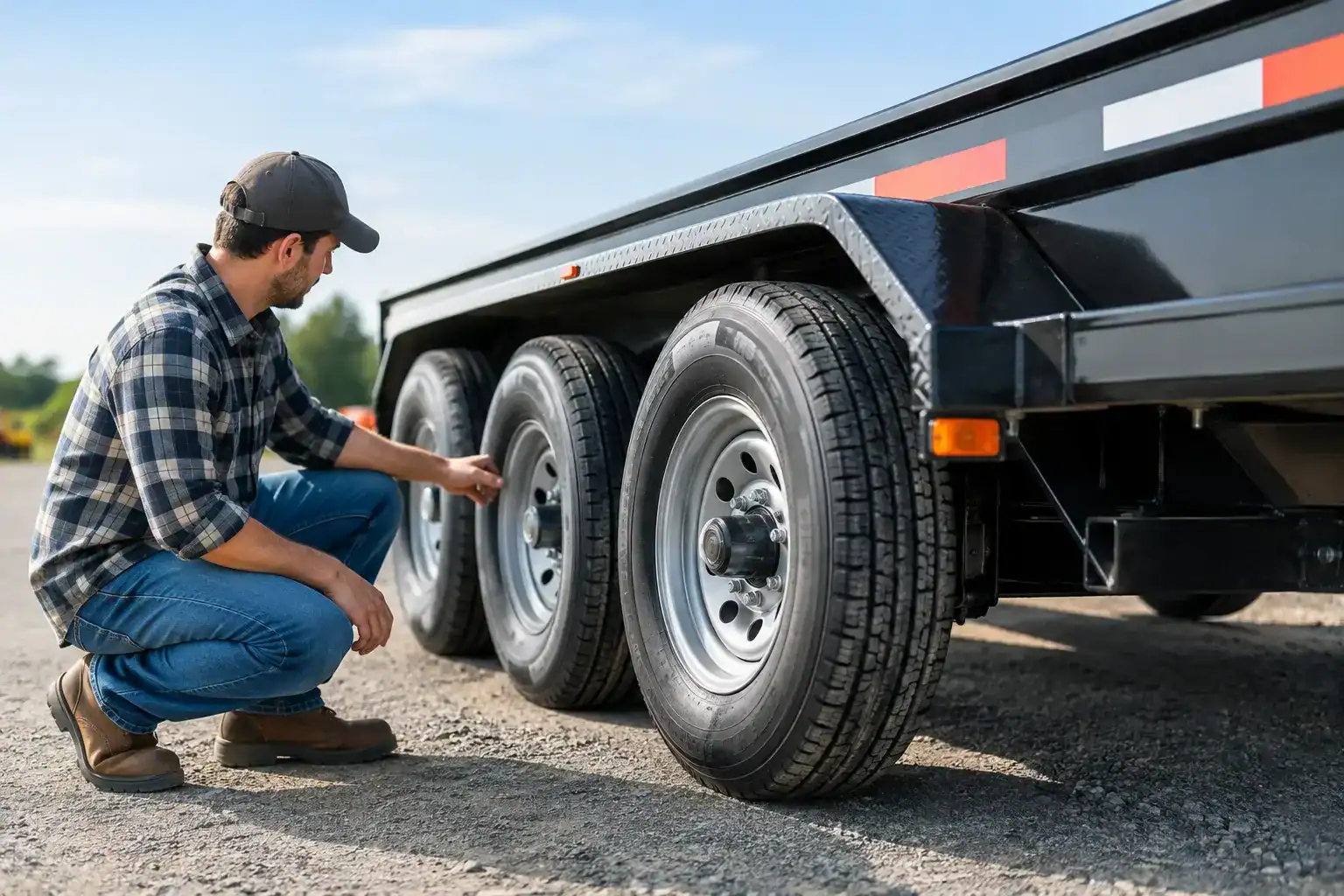
A trailer can look solid in the yard and still let you down where it counts. If the trailer axles are undersized, poorly matched to the load, or overdue for service, the result can be uneven tire wear, poor handling, damaged bearings, and a trailer that is off the road when you need it most.
For a weekend box trailer, axle choice may be straightforward. For a tradesperson carrying tools every day, a landscaper hauling machinery, or a property owner moving feed and equipment, it needs more thought. The right axle setup is not about fitting the biggest components possible. It is about building or repairing the trailer around the work it actually has to do.
What trailer axles actually carry
Trailer axles do more than hold the wheels in place. They carry the load, work with the suspension to control movement, provide a mounting point for brakes where required, and take a constant beating from potholes, rough access tracks, curbs, and uneven job sites.
An axle rating is the maximum load that axle assembly is designed to support. But that figure is only one part of the equation. Your usable trailer capacity is limited by the lowest-rated part of the complete setup. That includes the chassis, suspension, wheels, tires, hubs, coupler, brakes, and tie-down system.
A trailer with two 3,500-pound axles, for example, is not automatically suitable for every 7,000-pound load. Trailer weight counts too. So does the way the load is positioned. Put a compact machine too far forward or stack heavy material at the rear, and the tow vehicle and axle group can both be working outside a safe balance range.
That is why an honest axle recommendation starts with questions. What are you hauling? How often? Is the load consistent, or does it change from job to job? Are you running mostly paved roads, construction sites, paddocks, or rough private access? Those answers matter more than choosing from a catalog by price alone.
Single axle or tandem axle?
A single-axle trailer is often a practical choice for lighter work. It is generally easier to maneuver by hand, has fewer tires and bearings to maintain, and can be a good fit for small general-purpose trailers, light equipment, and occasional household use.
The trade-off is that a single axle has less capacity and less margin when the load changes. It can also be less settled on rough roads or at highway speed, particularly when it is loaded badly. A puncture or bearing failure also leaves you with fewer options to get safely off the road.
Tandem axle trailers spread weight over four wheels and usually offer better stability for heavier loads. They make sense for plant trailers, larger box trailers, car trailers, machinery transport, and regular commercial use. They also provide more braking options and a greater capacity range.
That does not mean tandem is automatically better. A tandem setup adds cost, weight, tires, brakes, and service requirements. It can scrub tires during tight turns, especially on hard surfaces. The best choice is the one that gives you enough capacity and control without turning a simple job into an expensive, oversized trailer.
Load balance matters as much as axle capacity
A correctly rated axle cannot fix a badly loaded trailer. Weight needs to sit low, be secured properly, and be distributed to maintain suitable tow-ball or tongue weight. Too little weight on the tow ball can make a trailer unstable. Too much can overload the rear of the tow vehicle and reduce steering control.
As a practical rule, place heavy equipment close to the axle group, then make measured adjustments forward or back to achieve stable towing. Do not assume a load is safe because the trailer is sitting level. Level is useful, but it does not tell the full story about load distribution.
If your regular load is difficult to balance, the answer may be a different axle position, longer drawbar, altered deck length, or purpose-built tie-down points. These are design decisions best made before the trailer is built, not after several frustrating towing trips.
Suspension, brakes, and hubs need to match
An axle is part of a system. Fitting a heavier axle under a trailer without checking the springs, hangers, equalizers, brake components, wheels, and chassis can create a new weak point instead of a better trailer.
Leaf spring suspension remains a common, proven choice for work trailers. It is straightforward, serviceable, and well suited to hard use when properly sized. It can ride firmly when unladen, particularly on heavier trailers, but it is dependable and practical for many trade, farming, and transport applications.
Independent suspension can provide improved ride quality and wheel control, especially over uneven ground. It may be worthwhile where equipment needs better protection or the trailer spends plenty of time on rough surfaces. It also costs more, and repair decisions should consider parts availability and the type of use rather than chasing a feature you may not need.
Brakes should be selected according to the trailer’s weight rating, legal requirements where it will operate, and the loads it will carry. Electric brakes are common on many working trailers because they can provide controlled braking when correctly set up and maintained. Brake controllers, wiring, magnets, drums or discs, and breakaway systems all need regular inspection. A brake system is only dependable when every part of it is doing its job.
Hubs, bearings, and seals deserve the same attention. They are small parts with a big impact on uptime. A worn bearing may begin with heat, noise, wheel play, or grease around the hub. Leave it too long and it can damage the hub, spindle, brakes, and wheel, turning a routine service job into a roadside recovery.
Signs your axle setup needs attention
Trailer problems rarely appear without warning. A trailer that pulls to one side, bounces excessively, wears tires unevenly, or sits lower on one side should be inspected before the next load goes on it.
Watch for these issues in particular:
- Tires wearing heavily on one edge, cupping, or showing different wear side to side
- Grease leaking from hubs, hot wheel centers after towing, or a rumbling bearing noise
- Bent wheels, loose U-bolts, cracked spring leaves, worn shackles, or damaged suspension hangers
- A trailer that sways, feels unsettled, or brakes unevenly under a normal load
These faults are not always caused by the axle itself. The cause could be wheel alignment, overloaded suspension, a bent spindle, failed brake hardware, or a load that is consistently placed in the wrong spot. Proper diagnosis matters. Replacing parts without finding the cause is how small problems keep coming back.
Choose capacity for the work ahead
Buying or building right on the limit is false economy. If your normal load is close to the trailer’s maximum rating, every pothole, curb, and uneven site places the running gear under sustained stress. You may get by for a while, but bearings, tires, springs, and brakes will show the cost.
Allow sensible capacity for the trailer’s own weight, tools, accessories, and the heaviest load you genuinely expect to carry. This does not mean guessing wildly or fitting oversized running gear that makes the trailer unnecessarily heavy. It means leaving workable headroom and making sure the full trailer is engineered as a matched package.
For custom work, consider the details that affect axle choice: deck length, ramp weight, cage height, water tanks, toolboxes, spare wheels, loading angle, and where machinery will sit. A trailer used for a skid steer needs different thinking than one carrying lawn equipment, furniture, or building supplies.
Service trailer axles before they cause downtime
Regular servicing is cheaper than replacing damaged running gear after a failure. The right interval depends on use. A lightly used recreational trailer may need less frequent attention than a commercial trailer that sees loaded highway miles, muddy sites, and long days every week.
At service time, inspect and adjust bearings where applicable, replace seals as needed, check brake operation and wiring, inspect suspension hardware, torque wheel nuts to the manufacturer specification, and assess tire condition and pressure. Also check the axle beam and chassis around the mounts for impact damage or cracking.
If you are changing how you use the trailer, have the axle setup assessed before you start hauling heavier gear. A properly matched axle, suspension, and brake package gives you a trailer that tracks straight, carries its load properly, and gets home ready for the next job.