
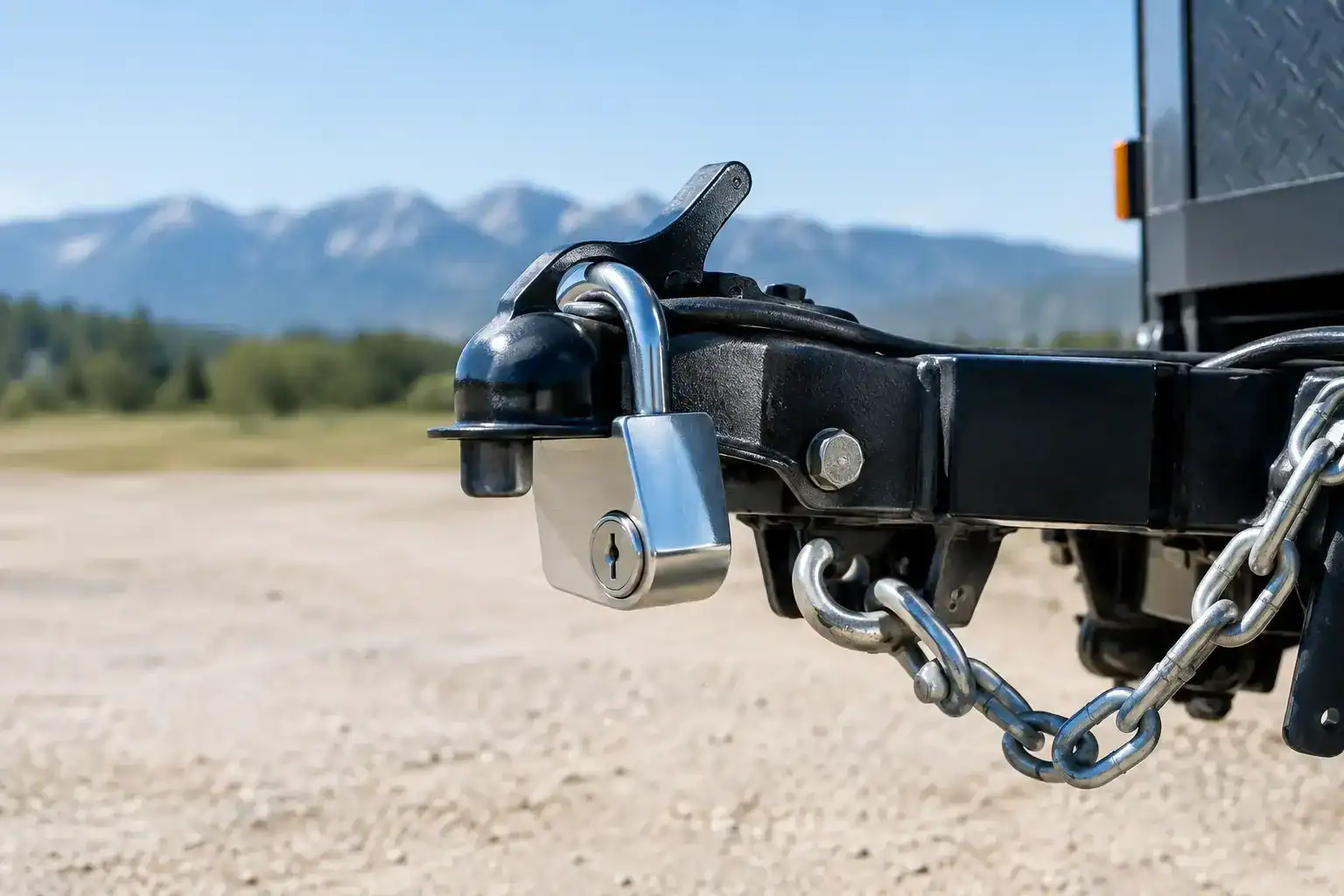
A trailer left unattended at a fuel stop, job site, campground, or driveway is an easy target if the only barrier is a standard coupler latch. The best trailer locks for towing do not make theft impossible, but they create delay, noise, and hassle – three things opportunistic thieves try to avoid. The right setup also protects the trailer without getting in the way of a safe trip.
The first point is worth making clearly: a security lock is generally for when the trailer is parked, not when it is connected and moving. Do not tow with a coupler lock, wheel clamp, or any device fitted in a way that can interfere with the hitch, wheels, brakes, or safety chains. Remove it before pulling out, then refit it whenever the trailer will be unattended.
What makes a trailer lock worth buying?
A good lock has to fit the trailer you actually own. That sounds obvious, but plenty of owners buy a universal-looking lock only to find it does not close around their coupler, leaves too much room to be attacked, or cannot be used with a hitch-mounted accessory.
Start with the coupler type and size. Ball couplers, lunette rings, pintle hitches, and gooseneck or fifth-wheel setups all need different security approaches. Measure the opening, check how the latch operates, and allow for safety-chain brackets, breakaway hardware, and jack handles that may limit access.
Material matters as well. Look for hardened steel, a protected lock cylinder, tight tolerances, and a finish that can handle rain, road grime, and salty coastal air. A lock that is difficult to use after six months outside is not much protection. Covers over the keyway help keep dust and water out, while bright colors can provide a useful visual reminder to remove the device before towing.
The final question is where the trailer lives. A box trailer stored behind a house has different risks from a work trailer left at changing job sites. For many owners, one lock is sensible. For a high-value enclosed trailer, equipment trailer, or trailer that regularly carries machines and tools, layered security is the better call.
7 best trailer locks for towing and parked security
There is no single best lock for every trailer. The right choice depends on the hitch, the storage location, and how often you need to lock and unlock it. These are the lock types that make practical sense.
1. Coupler locks
A coupler lock blocks access to the trailer coupler when the trailer is unhitched. Most use a hardened steel ball or shaped insert that sits in the coupler socket, stopping someone from dropping the coupler onto a tow ball.
This is the most useful everyday option for common ball-coupler trailers because it is quick to fit and compact enough to keep in the tow vehicle. Choose a design made for your coupler size. A loose-fitting lock can be easier to pry, cut, or work around than one that properly fills the opening.
2. Full-wrap coupler locks
Full-wrap models cover more of the coupler body and latch area than a basic ball-style lock. They are bulkier, but the extra steel limits access to the mechanism and makes attacks with hand tools more difficult.
They suit trailers that are parked for long periods, especially enclosed cargo trailers and trade trailers holding valuable gear. The trade-off is convenience. Check that the unit clears your jack and safety-chain mounting points before buying.
3. Receiver hitch pin locks
A locking hitch pin secures a ball mount, cargo carrier, bike rack, or other accessory to the tow vehicle’s receiver. It will not stop someone from stealing an unhitched trailer, but it can stop a thief from walking off with your drawbar-mounted ball mount while you are parked.
Use the correct pin diameter and usable length for the receiver and accessory. Cheap pins with exposed cylinders are often vulnerable to dirt and corrosion, so a weather cap and a solid locking head are worthwhile.
4. Locking hitch pins for adjustable ball mounts
Adjustable ball mounts are practical when you tow trailers at different heights, but they can be expensive and quick to remove if the pins are not secured. Purpose-made locking pins protect the mount and help keep it set at the right height.
This is a convenience and theft-prevention measure rather than a replacement for a trailer coupler lock. Confirm the lock does not interfere with the safety chains, electrical plug, or breakaway cable when the trailer is connected.
5. Wheel clamps
A wheel clamp prevents the wheel from rotating and is easy for a passerby to see. That visibility is part of the benefit. A thief deciding between two trailers is more likely to move on from the one with an obvious clamp on a wheel.
Wheel clamps work well as a second layer for trailers stored at home, on rural property, or in an open yard. Buy one that fits your tire diameter and width, and position it according to the maker’s instructions. A poor fit can damage the wheel or allow enough movement to defeat the purpose.
6. Wheel chock locks
Locking wheel chocks sit against the tire and physically restrict movement. They are particularly handy for tandem-axle trailers because they can lock between two wheels on the same side, limiting rolling in either direction.
They are not as portable as a coupler lock, but they are useful for long-term parking. On uneven ground, still chock and park the trailer correctly. A security chock is not a substitute for applying the trailer brakes where fitted or using safe parking practices.
7. Spare tire locks
A spare tire lock will not secure the whole trailer, but it protects a part that is regularly targeted and expensive to replace when you need it most. Under-frame spares, side-mounted spares, and enclosed-trailer spares all use different carriers, so match the lock to the mounting arrangement.
This is a sensible addition for anyone hauling long distances or working away from home. A missing spare can turn a simple puncture into lost time, a recovery bill, and a missed job.
Build security in layers, not around one lock
The strongest practical setup usually starts with a correctly fitted coupler lock while parked. Add a wheel clamp or locking chock when the trailer is stored for days or weeks. If the trailer carries tools, machines, or recreational equipment, lock the trailer doors separately and avoid leaving valuables visible through windows or vents.
Parking position matters too. Back the trailer into a driveway or against a solid obstacle where access to the coupler is restricted. Keep it in a well-lit area where possible, and do not leave keys, registration documents, or gate remotes in the tow vehicle. A lock is one part of a security routine, not the entire routine.
For work trailers, inspect locks as part of the pre-trip check. Make sure every security device is removed, the coupler is fully latched on the correct ball, the hitch pin is secured, safety chains are crossed and connected, lights work, and the breakaway cable is attached correctly. Security should never create a towing risk.
Avoid these common buying mistakes
Do not choose by price alone. Lightweight locks with thin bodies, exposed fasteners, and vague fitment claims may look similar in a product photo but offer little resistance in real use. Also avoid relying on a lock that shares the same key as every other lock in a fleet or neighborhood. Keyed-alike systems are convenient, but key control matters.
Be realistic about what a lock can do. Battery tools can defeat many security products given enough time and privacy. Your goal is to make the trailer less attractive, more time-consuming to steal, and harder to move without being noticed. A well-fitted lock combined with smart parking and visible deterrents is far more useful than an expensive lock used carelessly.
Before the next overnight stop or weekend away, check the coupler style on your trailer, choose a lock that genuinely fits it, and practice fitting and removing it at home. When security is simple to use, it is far more likely to be used every time.