
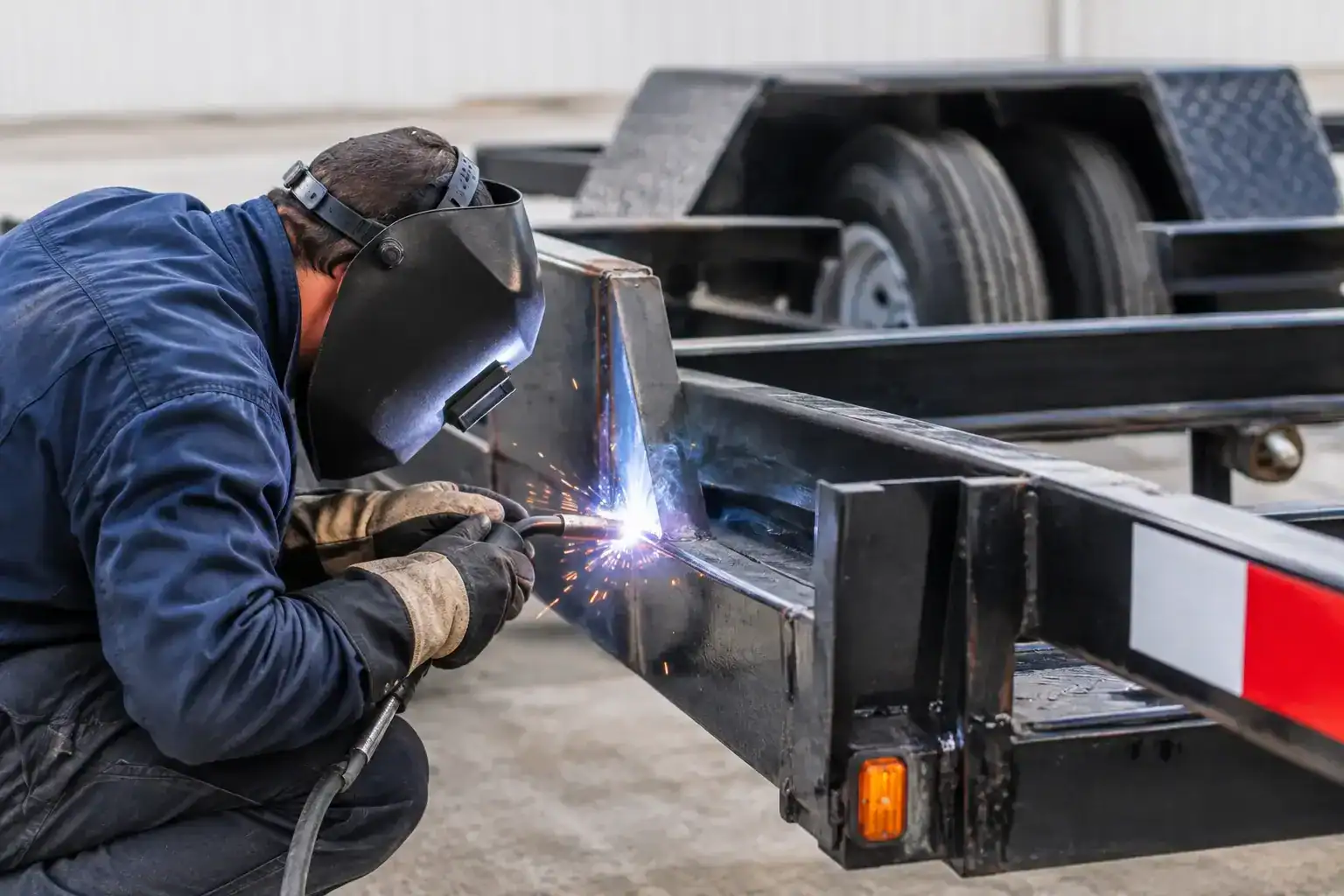
A cracked drawbar, split spring hanger, or loose ramp hinge is not just an ugly weld. It can turn a normal haul into a damaged load, a missed job, or a dangerous trip home. Proper trailer welding repairs restore the strength of the trailer where it matters, rather than covering a problem until it fails again.
For working trailers, the question is rarely whether a crack can be welded. The real question is why it cracked, how far the damage has spread, and whether the surrounding steel can carry the load once the repair is complete. That is the difference between a repair that gets you back to work and a patch that leaves you stranded later.
When trailer welding repairs are needed
Welded trailers handle constant vibration, uneven ground, weather, heavy loads, reversing forces, and the occasional hard knock. Over time, that punishment shows up at high-stress points. Common trouble spots include drawbars, A-frames, crossmembers, spring hangers, axle mounts, ramp frames, tailgates, side rails, tie-down points, and cage mounts.
A visible crack is the clearest warning sign, but it is not the only one. Rust staining around a joint, paint lifting beside a weld, a ramp that no longer sits square, uneven tire wear, or a trailer that feels unsettled behind the tow vehicle can all point to structural movement. So can new rattles and clunks when the trailer is loaded.
Do not assume every crack means the trailer is finished. Many trailers can be repaired safely and economically. But continuing to tow while a structural section is cracked can allow a small fault to spread into adjoining rails, floor supports, suspension mounts, or the drawbar. The longer it is left, the more likely the repair becomes larger and more expensive.
A sound weld starts with the cause of the failure
A good repair is more than running a bead over a split. If the steel has fatigued because the trailer is regularly overloaded, the wrong suspension is fitted, or a crossmember is unsupported, the same crack may return beside the new weld.
The repair process should begin with an honest inspection of the damaged area and the parts around it. That means checking for rust loss, bent members, poor previous repairs, damaged brackets, loose fasteners, and signs that the trailer has been twisting under load. The trailer’s intended use matters too. A box trailer carrying green waste on weekends has different demands from a plant trailer hauling equipment every day.
In some cases, the best answer is a weld repair followed by reinforcement. In others, a bent or thin section needs to be cut out and replaced with new steel. Adding a gusset or a new crossmember can make sense when it supports the original design and does not create a fresh stress point elsewhere. More steel is not automatically better if it is added in the wrong place.
A proper repair also needs clean preparation. Cracked steel is opened up as needed, rust and contamination are removed, damaged material is assessed, and the joint is welded to suit the section and its job. Afterward, the area should be checked for alignment, protected against corrosion, and tested through normal movement where relevant, such as ramps, tailgates, or suspension components.
The repairs that should not be treated as quick fixes
Some trailer faults are more serious because they affect control, load security, or the connection between trailer and tow vehicle. Drawbar and A-frame cracks deserve immediate attention. These parts take braking, acceleration, cornering, and towing forces every mile. A cosmetic-looking crack near a coupling mount or where the drawbar joins the chassis can be a major safety issue.
Suspension hangers and axle mounts are another area where shortcuts cause trouble. If a hanger has cracked away from the chassis, simply welding it back in its current position may leave the axle out of square. That can affect handling and tire wear, and it may hide damage in the chassis rail behind it. Measurement and alignment are part of the job.
Ramp hinges, latches, and tailgate frames also need more than a quick pass with a welder. These parts are repeatedly loaded and often get hit by machinery, mowers, pallets, or loose equipment. A repaired hinge needs to open, close, latch, and carry weight correctly. If it binds or sits out of line, it will continue to stress the repair.
Repair or replace? The practical call
Not every damaged trailer is worth rebuilding. An honest workshop should tell you when the steel is too corroded, the chassis is badly distorted, or repair costs are getting too close to a safer replacement or custom build.
Replacement can be the better option when corrosion has weakened several main rails, repeated cracking shows the trailer is not suited to its workload, or an accident has distorted the chassis across multiple areas. It can also make sense if the trailer has ongoing limitations that repairs alone will not solve, such as insufficient load capacity, poor ramp access, inadequate tie-down points, or unsuitable brakes.
That does not mean a newer trailer is always the answer. A well-built trailer with localized damage can often be restored for far less than replacement, especially when the frame is sound and the repair addresses the cause. The right decision depends on the condition of the whole trailer, how you use it, and what downtime costs your business or weekend plans.
What to do before bringing in a damaged trailer
If you spot a structural crack, stop loading the trailer beyond what is necessary and avoid towing it if the damage is near the drawbar, suspension, axle mounts, coupling, or safety-chain area. A temporary repair made at home may appear to hold, but it can conceal the full extent of the crack and make proper assessment harder.
Take a few clear photos before cleaning the area. Include close-up images and wider shots that show where the damage sits on the trailer. It also helps to note what the trailer was carrying, whether it struck something, and when you first noticed the issue. That information gives the repairer a better starting point.
Remove loose gear and make sure the trailer is safe to inspect. If it has been in a collision or is sitting crooked, do not assume it can be towed normally to a workshop. Ask for advice on the safest next step. Saving one transport cost is not worth worsening chassis damage or risking a failure on the road.
Keep welded repairs working longer
Welding repairs last longer when the rest of the trailer is maintained. Check the trailer after hard use, especially after hauling machinery, driving rough access roads, or carrying wet and heavy materials. Look underneath, not just at the sides you see when loading.
Pay attention to load placement. Excessive ball weight, a load concentrated over one small section of floor, or weight sitting behind the axle can put forces into the chassis that it was not designed to handle. Use rated tie-down points, secure the load properly, and stay within the trailer’s capacity.
Regular servicing also matters. Worn suspension bushes, loose U-bolts, tired bearings, and damaged brakes can create vibration and movement that works against welded joints over time. A trailer is a system. Fixing one crack without checking the components around it can leave the underlying problem in place.
At AJF Trailers, repair work is assessed with the trailer’s actual job in mind, whether it is hauling tools, equipment, materials, livestock supplies, or weekend gear. The aim is not to make the damage less visible. It is to return the trailer to dependable service with a repair that makes practical sense.
Your trailer carries more than cargo. It carries your schedule, your equipment, and often your ability to get paid. If a weld has cracked or a structural section does not look right, deal with it before the next load turns a repairable problem into a roadside failure.