
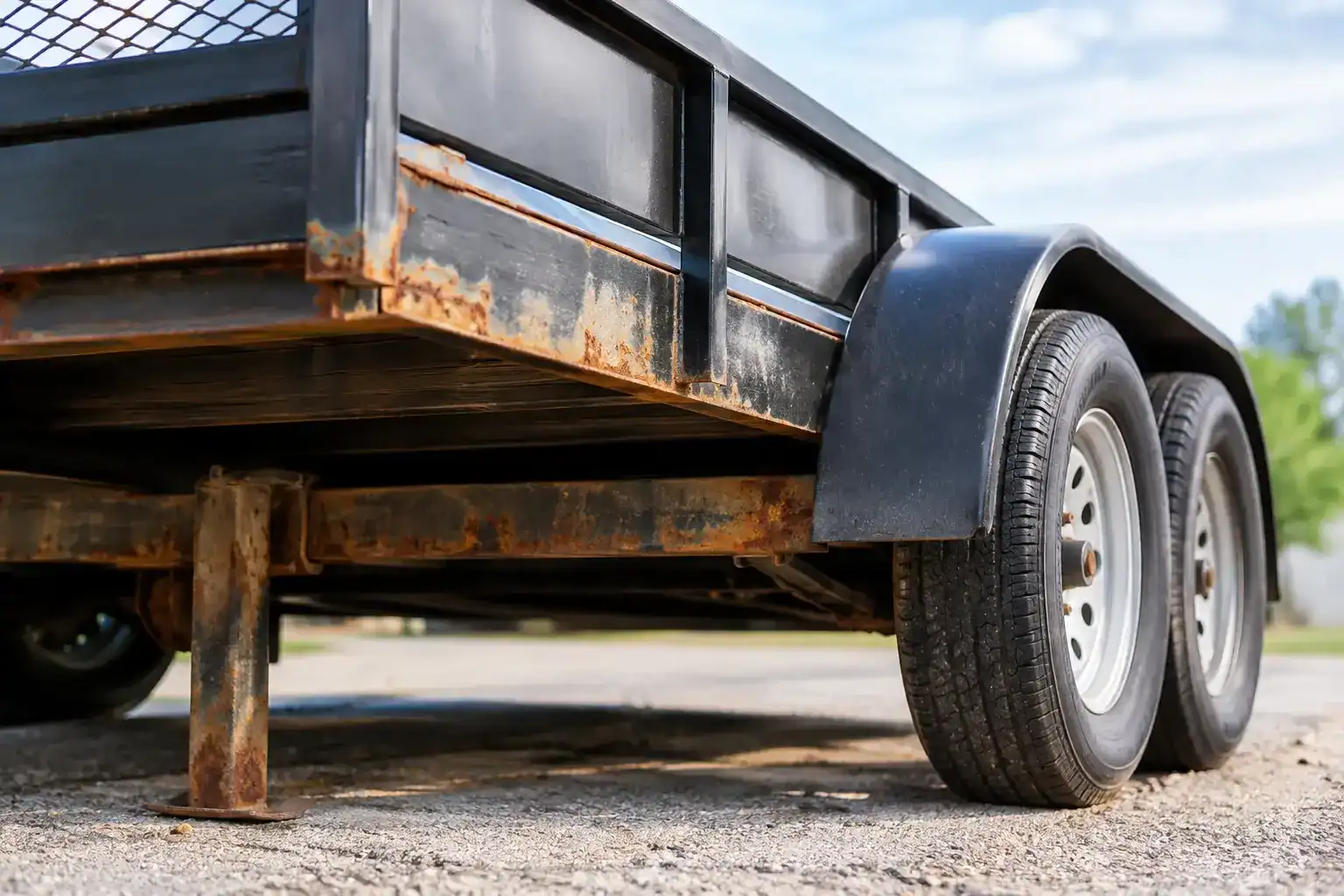
A small rust spot on a trailer frame can look harmless right up until it turns into a weak tie-down point, a rough brake component, or a hole in a crossmember. So, can trailer rust spread? Yes – not like an infection jumping from one panel to another, but corrosion can continue growing wherever bare steel, moisture, oxygen, and contaminants are present. Left alone, it can work under paint, into seams, and through structural steel.
For a trailer that earns its keep on jobsites, farms, or weekend trips, rust is more than a cosmetic issue. It can mean failed inspections, unreliable brakes, lost load security, and downtime when you need the trailer ready to work.
Can Trailer Rust Spread Across a Trailer?
Rust is an electrochemical reaction. When steel loses its protective paint, galvanizing, or coating, water and oxygen begin attacking the exposed metal. Road salt, coastal air, wet grass, fertilizer, mud, and trapped debris speed the process up.
The rust itself does not crawl across clean, well-coated steel. What happens is that corrosion breaks down the surrounding coating. Rust takes up more volume than the original steel, lifting paint at the edges and allowing moisture underneath. That is why a small chip can turn into a larger blistered area over time.
Water also travels. It enters lap joints, folded sections, hollow drawbars, underbody channels, and the space between a trailer floor and its frame. Once moisture is held in those areas, rust can form well beyond the spot you can see from the outside.
This is why a trailer can look presentable from the side while hiding serious corrosion underneath. A fresh coat of paint over flaky steel may improve appearances for a while, but it does not restore lost metal or stop moisture already trapped in a seam.
Where Trailer Rust Causes the Most Trouble
Surface rust on an exposed rail is usually manageable if it is dealt with early. Structural corrosion is different. It affects the parts that carry the load, connect the trailer to the tow vehicle, or keep the wheels and brakes operating correctly.
Pay close attention to the drawbar and coupling area, safety-chain mounts, A-frame joints, chassis rails, crossmembers, spring hangers, axle mounts, brake backing plates, wheel rims, and tie-down points. On box trailers and plant trailers, inspect beneath the floor and around the front corners where water and debris often collect.
Rust around welds deserves a proper look as well. A weld itself may be sound, but corrosion beside it can thin the parent metal. If the steel around a suspension hanger or tie-down is deteriorating, the issue is not solved by simply painting it black.
Surface Rust vs. Structural Rust
Surface rust is generally orange or brown staining with light roughness on otherwise solid steel. After cleaning, the metal remains firm and its original thickness is largely intact. This is the stage where preparation, rust treatment, primer, and a quality topcoat can make a lasting difference.
Structural rust is more serious. Signs include flaking layers, swelling seams, pitting, holes, soft spots, distorted steel, loose mounts, or metal that can be pierced with a screwdriver. If corrosion has reduced the thickness of a chassis member or mounting plate, treatment alone is not enough. The affected section may need to be cut out and replaced with sound steel.
There is a trade-off here. Repairing a localized section early is usually straightforward and cost-effective. Waiting until rust reaches multiple rails, suspension mounts, or brake components can turn a repair into a much larger job. In some cases, especially on a badly corroded light-duty trailer, replacement may be the safer value.
Why Rust Gets Worse So Quickly
Trailer owners often notice rust after a wet season, a trip near the coast, or months of sitting unused. Storage conditions matter as much as use. A trailer parked on damp ground under a tarp can stay wet longer than one parked on a firm, well-drained surface with airflow around it.
Mud and wet grass hold moisture against the underside. Salt and fertilizer are particularly aggressive because they create a conductive film that accelerates corrosion. Even ordinary road grime can keep water trapped in corners and around fasteners.
Damage to the coating starts the cycle. Stone chips, scraped paint from loading equipment, worn areas under straps, and scratches near ramps all expose steel. If those spots are ignored, water gets behind the finish and the repair area grows.
Hollow sections are another concern. A drawbar or enclosed rail can rust from the inside if water enters through an open end, damaged cap, or unsealed opening. External paint will not tell you much about what is happening inside, so drainage and sealing details matter.
How to Stop Rust Before It Becomes a Repair Job
The best rust prevention is regular cleaning and early attention. After working in mud, wet grass, salt spray, or around fertilizers, rinse the trailer thoroughly, including the chassis, suspension, brakes, and underside. Let it dry before storing it.
During a routine check, look closely at paint chips, bubbling finish, damaged galvanized areas, and places where water sits. Remove loose rust back to solid material, clean the area properly, use a suitable rust treatment where needed, then apply compatible primer and topcoat. The preparation is the part that determines whether the repair lasts.
Keep drain holes clear and avoid filling low points with sealant where water needs a way out. Replace missing caps on hollow sections and repair damaged floorboards or seals that allow water to sit against the frame. If you use the trailer near the coast or on salted roads, inspect it more often.
A basic maintenance routine should also include checking wheel bearings, brakes, lights, couplings, safety chains, and fasteners. Rust is often found while dealing with another maintenance item, which is exactly when it is easiest to address before it becomes a safety issue.
When a Rust Repair Needs a Workshop
Do not assume every rust repair is a wire-brush-and-paint job. If corrosion is near the coupling, drawbar, axle, suspension, brakes, safety chains, load-bearing floor supports, or critical tie-downs, have it assessed before towing a heavy load.
A proper repair starts with finding the full extent of the damage. That may mean removing flooring, guards, brake drums, or damaged coating to inspect the steel behind it. The rusted section is then removed back to sound metal, replacement steel is fabricated and welded correctly, and the area is protected so the same problem does not return quickly.
This is also the time to consider whether the trailer needs a practical improvement. Better drainage, stronger tie-down placement, repaired mudguards, upgraded flooring, or a modified ramp arrangement can prevent repeat damage while making the trailer more useful for the job it does.
At AJF Trailers, the focus is on identifying whether a repair is genuinely worthwhile and carrying it out properly, rather than covering up a problem that will return after a few months.
A Simple Rust Check Before You Tow
Before a long haul or a heavy load, walk around the trailer with a light and look underneath. Check for fresh flakes on the ground, paint bubbles, cracked seams, loose brackets, and rust around mounting points. Push lightly on suspect areas only when the trailer is safely parked and unloaded. If steel flexes, crumbles, or looks deeply pitted, stop there and get it checked.
Also inspect the parts that are easy to overlook: the underside of the drawbar, inside the wheel arches, behind mudflaps, the rear crossmember, and beneath the floor. These areas take the worst of water and road debris.
Rust does not have to put a good trailer out of service. Catch it while it is surface-level, keep moisture and contaminants off the steel, and do not gamble with corrosion around load-bearing or safety-critical parts. A timely, honest repair keeps the trailer ready for the next job instead of leaving it parked when you need it most.